 18/9-17/10 2020
Jubiläumsausstellung zum 80 geburtstag
Galerie Kellermann | Düsseldorf | Deutschland
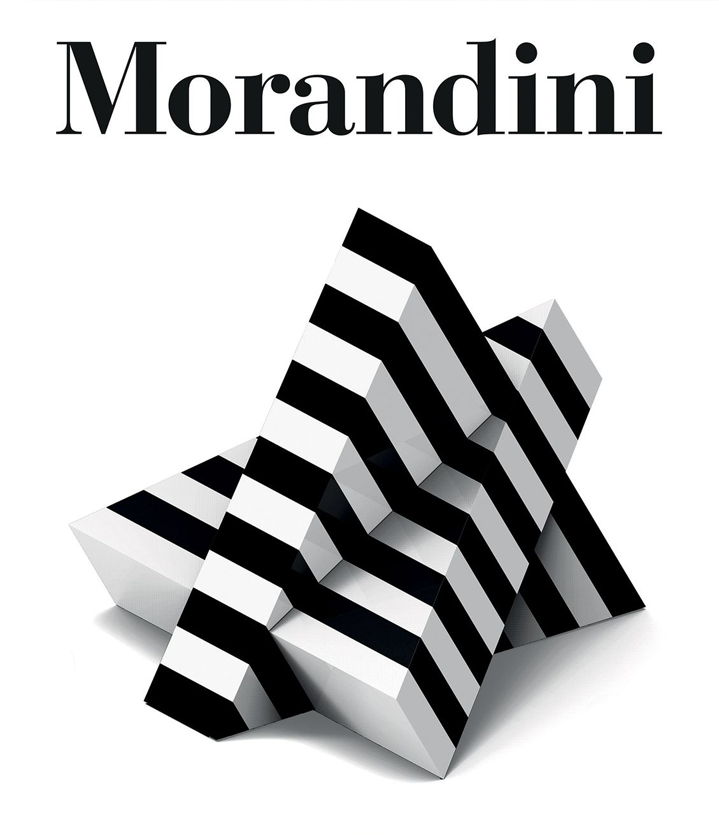
The exhibition brings into focus a practice where geometry and material presence articulate a disciplined yet lyrically charged visual language. What might initially seem austere — black and white, hard edges, repeating modules — reveals itself to be an inquiry into the conditions of perception, form, and spatial logic. In the works on view, minimal contrasts become generative forces, organizing surfaces with the kind of precision that transforms optical restraint into visual tension.
At the heart of this careful modulation is Marcello Morandini, whose career has spanned more than half a century, moving fluidly between painting, sculpture, design, and architecture. His early training at the Brera Academy and beginnings in industrial design informed a lifelong interest in systems, measurement, and the interplay of structure and perception. By the mid‑1960s, Morandini had begun producing the geometric works that would define his contribution to European neo‑constructivism, leading to international recognition at venues such as the São Paulo and Venice Biennales and later inclusion in documenta.
What distinguishes Morandini’s works on display is the way they occupy space without resorting to expressive excess. The characteristic interplay of black and white — so familiar from his plates, sculptures, and architectural proposals — is here deployed not merely as contrast but as a generator of rhythm and depth. Rectilinear forms, modulated surfaces, and sharply delineated planes create constellations that seem both rigorous and vibrant, as if each piece were a carefully tuned instrument responding to light, perspective, and movement.
This geometric vocabulary is not static. Instead, it functions as a field of relations: lines intersect, surfaces activate neighboring voids, and edges mark thresholds of perception. The viewer becomes an active participant, discovering shifts in scale and tension as one walks around and between the works. Far from a neutral backdrop, the gallery space becomes an extension of Morandini’s method — a network of planes and axes that underscores the architectural sensibility at the core of his practice.
Indeed, architecture has played a central role throughout Morandini’s trajectory. Large‑scale public projects and site‑specific commissions have allowed similar formal principles to engage with urban space. Whether in piazzas, facades, or towers, the same principles of proportion, repetition, and contrast reappear, translated into environments that frame human movement and social interaction. These built works demonstrate how geometric abstraction can be woven into the fabric of daily life, shaping experience without relinquishing intellectual rigor.
The objects and surfaces in the exhibition also reflect Morandini’s long engagement with material specificity. Glossy acrylics, lacquered wood, polished marble, and granite carry not only form but presence; the finish of each surface amplifies light and shadow, encouraging prolonged looking and subtle shifts in perception. Colour is used economically, yet its juxtaposition with black and white generates a chromatic logic of its own — one that resonates with both optical clarity and sculptural depth.
Across the breadth of his career, Morandini has maintained a consistent integrity: geometry is neither decoration nor abstraction for its own sake. It is a means of structuring experience, an ongoing negotiation between the formal and the perceptual. Viewers are drawn into this negotiation, invited to witness how simple elements — line, surface, contrast — can yield complex effects when placed in careful relation. The works do not dictate meaning; they unfold as fields of possibility, where the interplay of form and space opens up a quiet but profound visual discourse.
In this context, the exhibition becomes more than a retrospective. It is an opportunity to witness how Marcello Morandini’s disciplined formal language, refined across decades and articulated in multiple media, continues to speak to the conditions of contemporary perception — reminding us that geometry, far from being a closed system, remains a vibrant terrain for thinking about how we see and encounter our world.