 7/9 2018 – 20/1 2019
Národní galerie Praha | Valdštejnská jízdárna | Praha | Česko
The exhibition presents a comprehensive survey of the work of František Kupka (1871–1957), tracing his artistic development from his early production in the 1890s to his abstract works of the 1950s. Conceived as a chronological and thematic overview, the project examines Kupka’s central role in the transition from symbolism to abstraction, situating his work within the broader transformations of modern art in the first half of the twentieth century.
The exhibition brings together oil paintings, works on paper, printed matter and documentary materials, assembled through international collaboration, and reflects the diversity of media and approaches that characterized Kupka’s practice over several decades.
The selection includes key works from major institutional collections such as the National Gallery, the Centre Pompidou in Paris, the Guggenheim Museum in New York and the Albertina in Vienna, allowing for a comparative reading of different phases of his career.
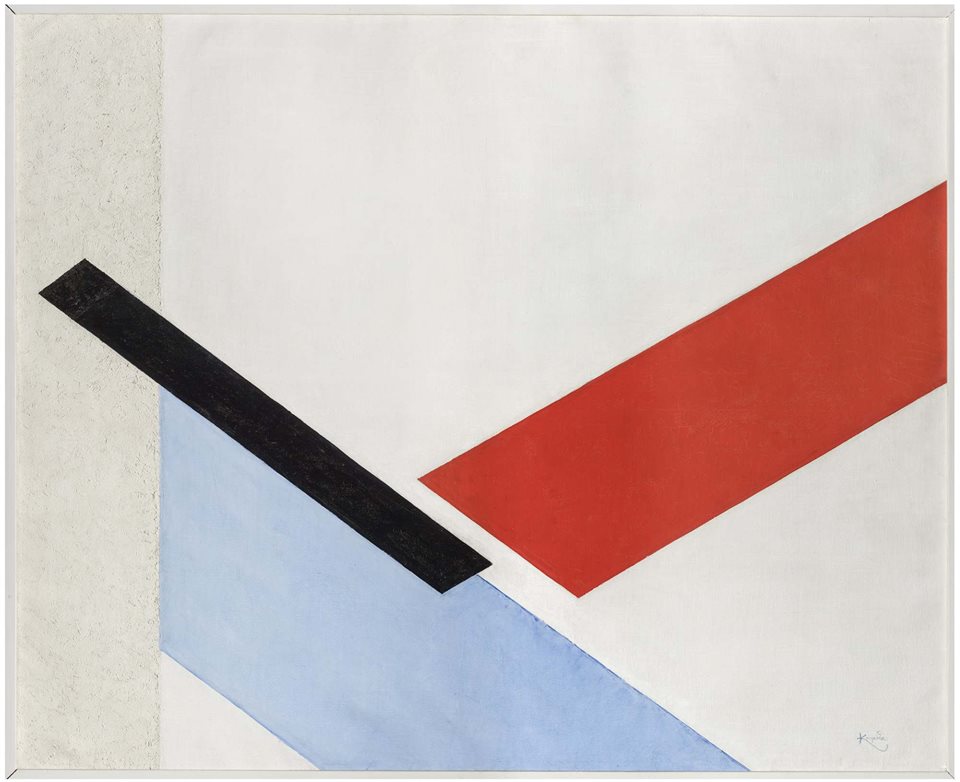
Kupka’s early work reveals an engagement with symbolism, allegory and spiritual themes, informed by his interest in philosophy, science and theosophy, while his subsequent experiments demonstrate a progressive move toward non-objective composition based on rhythm, movement, color and form. The exhibition is structured into thematic sections that make it possible to follow this evolution step by step, highlighting the conceptual and formal shifts that led Kupka to develop a personal approach to abstraction that ran parallel to, yet independent from, other avant-garde movements of his time.
Born in Bohemia and later active in Paris, Kupka was both a painter and an intellectual figure who combined artistic practice with theoretical reflection, contributing to early debates on abstraction and modernity.
The exhibition situates his work within this context, emphasizing the continuity of his research and the coherence of a career that played a formative role in the emergence of abstract art in Europe.