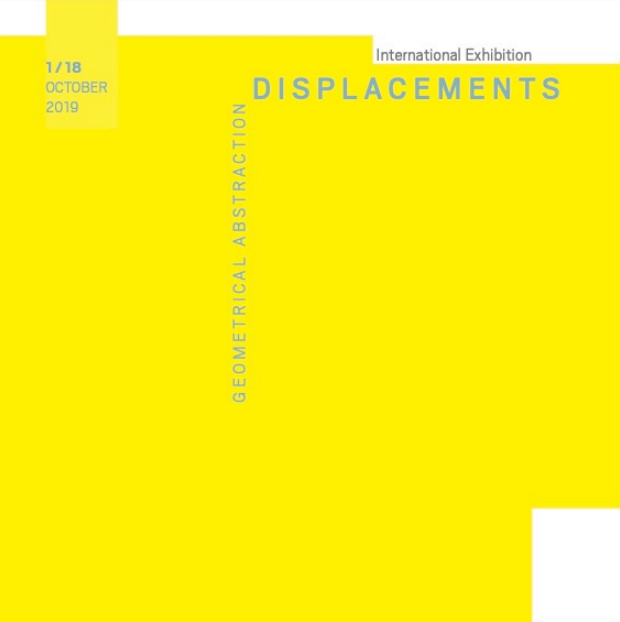
1/10 – 18/10 2019
Curators: Antonio Rabazas Romero, Jorge Varas, Mark Starel.
Universidad Complutense de Madrid | Facultad de Bellas Artes | Madrid | España
Manuel Ayllón, Waldo Balart, Eduardo Barco, Ove Carlson, Carlos Cartaxo, María Cuevas, Robert Ferrer, Tomás G. Asensio, Julian Gil, Gerhard Hotter, Carmen Hidalgo De Cisneros, Viktor Hulik, Piers Jackson, Tomasz Jedrzejko, Gerda Kruimer, Aleksandra Latecka, Josef Linschinger, Guillermo Lledó, David Magán, Jean-Luc Manguin, Jakub Matys, Grzegorz Mroczkowski, Tadeusz Myslowski, Mónica Oliva, Aleksander Olszewski, Anto Rabzas, Alfonso Sicilia, Magdalena Snarska, Francisco Sobrino, Mark Starel, Bogumila Strojna, Jolanta Studzinska, Przemek Suliga, Kamilla Szíj, Jorge Varas, Andras Wolsky, Joa Zak.
The “Urban Drift Research Group. Artistic interventions in the territory” presents the project GEOMETRICAL ABSTRACTION / DISPLACEMENTS organized and
curated by Professors Antonio Rabazas (Anto Rabzas) and Jorge Varas from the Faculty of BBAA of the UCM in Spain and Prof. Wieslaw Luczaj (Mark Starel) from the Jan Kochanowski University in Kielce, Poland.
Its main objective is the creation and dissemination of an archive of contemporary graphics that constitutes an international heritage related to Geometric Abstraction. To this end, the main lines of current Geometric Abstraction will be identified through work with the artists and their works. This first edition starts with a selection of works by 37 international authors.