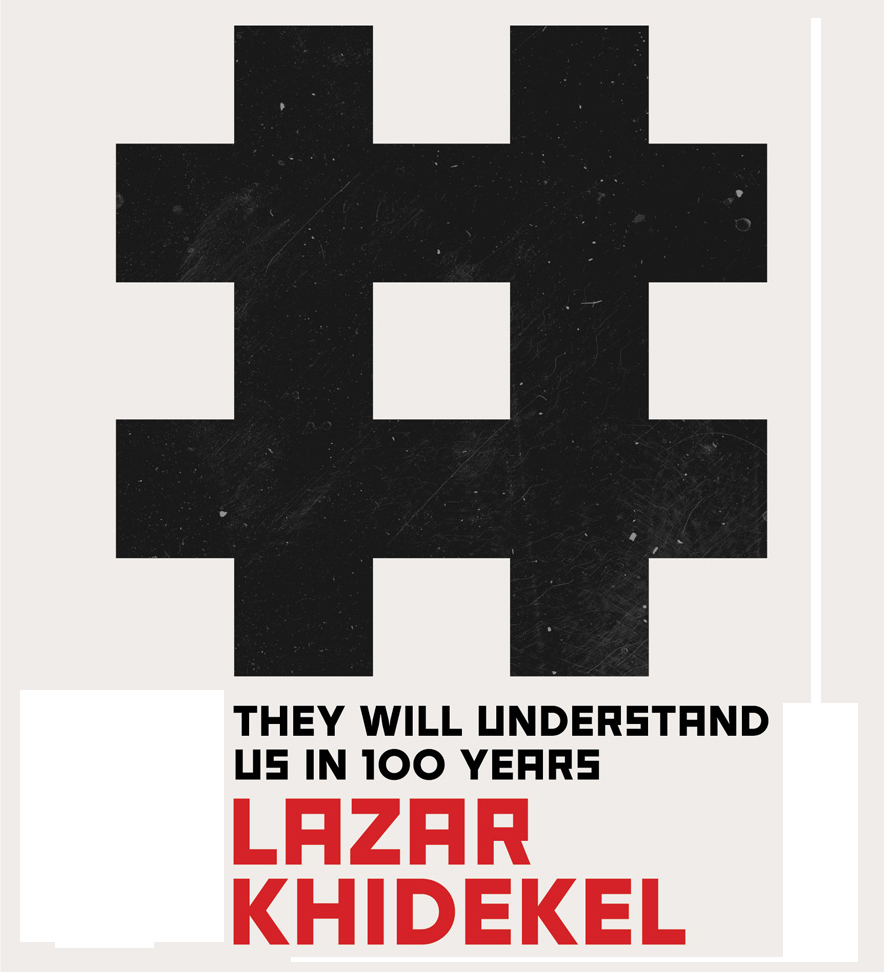
 15/2 – 15/4 2020
Curator | Maya Katznelson, Yekaterina Izofatova
National Art Museum of the Republic of Belarus | Minsk | Belarus
The exhibition unfolds as a long-awaited reassessment of a figure whose vision exceeded the horizon of his time. Conceived as the first comprehensive retrospective dedicated to Lazar Khidekel, it revisits the legacy of the avant-garde pioneer often described as the world’s first Suprematist architect. The project commemorates the centenary of the UNOVIS collective—New Art Promoters—situating Khidekel within the radical artistic laboratory that sought to redefine art, architecture and society in the early twentieth century.
The phrase “we will be understood in 100 years,” borrowed from the artist himself, serves not as a slogan but as a conceptual axis. It encapsulates the sense that Khidekel’s experiments—particularly his Suprematist architectural visions—anticipated debates that continue to resonate today: the integration of art and technology, the relationship between ecology and urbanism, and the aspiration to construct new spatial realities beyond conventional gravity-bound design. The poster image, derived from his 1920 composition Crossing Lines, foregrounds the Suprematist lattice that evolved from Kazimir Malevich’s Black Square into Khidekel’s own structural language—a grid that reads simultaneously as abstract form, architectural framework and contemporary “hashtag,” bridging historical avant-garde and digital culture.
Bringing together around one hundred works from the artist’s family collection in New York, alongside rare UNOVIS documents, the exhibition charts a trajectory from early compositions created in adolescence to the Suprematist cycles of the early 1920s and the visionary architectural and eco-futuristic projects of the late 1920s and 1930s. Concepts such as the Garden City, Aerocities and Space Dwellings reveal an imagination that expanded Suprematism beyond the canvas into speculative urban planning. These projects propose airborne structures, modular habitats and environmentally integrated cities—utopian constructs that now appear strikingly prescient.
The retrospective is enriched by contemporary technologies that extend Khidekel’s spatial propositions into immersive experience. Augmented reality elements and a virtual reconstruction of his “flying city” allow viewers to inhabit the visionary environments that once existed only as drawings and models. Animations by Roman Khidekel further reinterpret Suprematist geometry through the lens of space exploration and digital imagination, reinforcing the continuity between early twentieth-century abstraction and present-day innovation.
Beyond the display of works, the exhibition positions Khidekel within a broader cultural narrative, foregrounding both celebrated and lesser-known dimensions of Belarusian art history. A program of guided tours, lectures and educational workshops expands the project into a discursive platform, inviting audiences of different generations to engage with Suprematism not as a closed historical chapter but as an evolving inquiry into form, space and collective aspiration.
Ultimately, the retrospective underscores the enduring relevance of Khidekel’s vision. His practice dissolves the boundaries between painting and architecture, between utopia and construction, between aesthetic speculation and social transformation. A century after the radical experiments of UNOVIS, the promise embedded in his words acquires renewed resonance: the future remains a space to be imagined—and built—through the language of abstraction.