 25/6 – 25/9 2021
Cedric Christie, Michelle Grabner, Ditty Ketting, Zora Kreuzer, David Magán, Carter Potter, Patric Sandri, Meg Shirayama, Marc Vaux, Lars Wolter
Curator | Jonathan Stephenson
Rocket Gallery | London | England
Conceived as a concentrated reflection on colour and reduction, this exhibition brings together contemporary paintings, sculptures and wall-based works produced largely over the past two years, many of them developed under the spatial and psychological constraints imposed by the Covid lockdowns. Rather than addressing the pandemic directly, the works reveal how limitation can sharpen formal inquiry: scale becomes measured, gesture restrained, and colour distilled to its most essential presence.
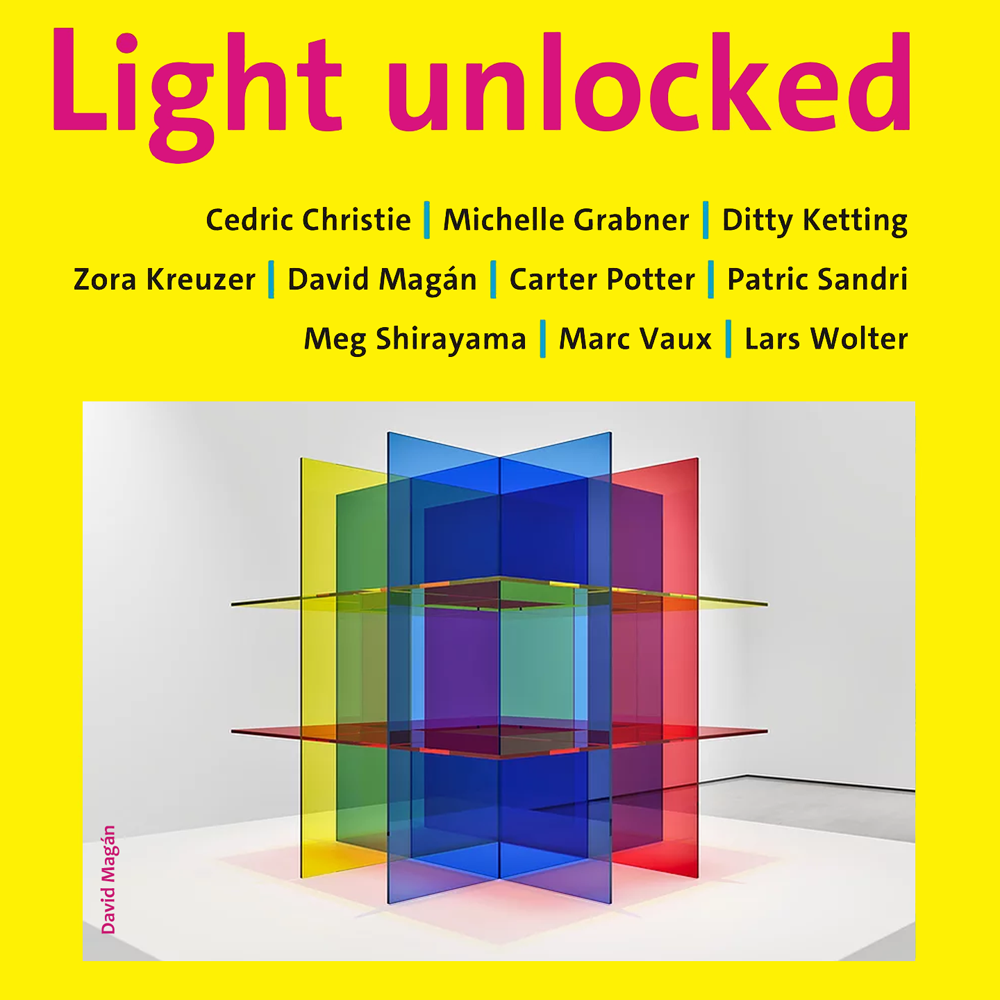
Working across cities such as London, Rotterdam, Berlin, Zurich, Madrid, Mönchengladbach, Milwaukee and Los Angeles, the artists assembled here share a commitment to minimal and post-minimal vocabularies, yet their approaches diverge in method and sensibility. Some pursue an almost architectural clarity, constructing surfaces where colour is embedded within layered structures or calibrated planes. Others foreground material tactility, allowing pigment, industrial finishes or translucent supports to activate light as a variable component of the work. In each case, colour is not illustrative but structural — it organizes space, defines rhythm and establishes perceptual thresholds.
Opaque and transparent surfaces coexist in the installation, producing a dialogue between absorption and reflection. Matte expanses absorb the gaze, insisting on density and weight; glossy or translucent elements, by contrast, refract light and destabilize spatial boundaries. The result is an environment in which colour radiates not as spectacle but as condition — something that inhabits the work and extends subtly into the surrounding space.
The exhibition avoids theatrical contrasts in favour of calibrated proximities. The installation underscores affinities without dissolving differences, allowing each practice to retain its internal logic while participating in a broader conversation about chromatic intensity and spatial economy. Seen together, these works suggest that minimal language remains fertile terrain: far from exhausted, it continues to offer a precise means of thinking through perception, presence and the disciplined expansion of colour into lived space.